How to Make Preserved Lemons: Elevate Tagines & Everyday Meals
Imagine a flavor that's intensely lemony, yet mellowed and deeply complex, a taste often described as "lemon umami." This isn't your everyday fresh lemon; this is the transformative magic of preserved lemons. While fresh lemons are undoubtedly kitchen workhorses, preserved lemons offer an irresistible depth that can elevate even the simplest dishes from good to absolutely unforgettable. Often associated with the rich, aromatic stews of Moroccan tagines, learning how to make preserved lemons is a surprisingly simple culinary endeavor that opens up a world of flavor possibilities for your kitchen. For many, the discovery of preserved lemons comes from a memorable meal, perhaps a chicken tagine that boasts a flavor unlike any other lemon chicken. As chef Ana Sortun aptly puts it, "Preserved lemons add a fermented quality that a regular lemon would not." This fermentation process softens the rind, concentrates the citrus oils, and transforms the sharp acidity into a nuanced, savory brightness that makes these humble fruits a true pantry essential.Beyond Fresh: Why Preserved Lemons Are a Culinary Game-Changer
The magic of preserved lemons lies in their unique flavor profile. Unlike the sharp, vibrant tang of fresh lemon juice or the bright, aromatic zest, preserved lemons offer something entirely different. The salt-curing and fermentation process breaks down the bitter compounds in the pith and rind, creating a tender, almost jammy texture. The acidity mellows significantly, while the essential lemon oils are intensified, resulting in a profoundly savory, floral, and deeply aromatic flavor that has a touch of briny salinity. This "lemon umami" makes preserved lemons incredibly versatile. They don't just add a splash of acidity; they infuse a dish with a complex, rounded citrus note that complements a vast array of ingredients. From rich meats and delicate fish to hearty grains and vibrant vegetables, their ability to add depth and brightness without overwhelming other flavors is unparalleled. Plus, the entire lemon (minus the seeds and sometimes the pulp, depending on use) becomes edible, offering both flavor and a delightful texture.A Journey Through Time: The Rich History of Preserved Lemons
The practice of preserving lemons is far from a modern culinary fad; it’s an ancient tradition born out of necessity and ingenuity. Like many preservation techniques, the salting of lemons originated as a practical method to store and enjoy this seasonal fruit long past its harvest. The earliest known written recipe for preserved lemons dates back nearly nine centuries to the 12th-century Egyptian treatise On Lemon, Its Drinking and Use by the Arabic-speaking court physician Ibn Jumay. Remarkably, his recipe for salt-cured lemons is almost identical to the method used today, a testament to its enduring effectiveness and delicious results. From its origins in ancient Egypt, this valuable condiment embarked on a meandering journey across continents. Preserved lemons became a staple in the cuisines of North Africa, the Middle East, and parts of Asia, finding their way into Moroccan tagines, Algerian couscous, Tunisian chickpea stews, and Indian curries. Despite their deep historical roots and widespread use in these regions, preserved lemons remained relatively obscure in Western cooking for many centuries, only beginning to appear in English-language cookbooks more recently. Even in the United States, where they've made their way into some pantries over the past few decades, they often retain an aura of exoticism. Esteemed chefs, even those well-versed in global spices, have been known to be unfamiliar with them, highlighting their unique and often surprising impact on those who taste them for the first time. For a deeper dive into their fascinating past, explore The Ancient Art of Preserved Lemons: History & Flavor Secrets.How to Make Preserved Lemons: Your Step-by-Step Guide to Culinary Transformation
Making preserved lemons is a testament to the power of "salt and patience." While they require a few weeks to properly cure, the active preparation time is minimal, and the reward is immeasurable.Equipment You'll Need:
- 2 x 500g (1lb 2oz) sealable Kilner-type jars or similar glass jars with airtight lids
- A clean cutting board and sharp knife
- A small bowl for salt
- Optional: A juicer for extra lemon juice
Ingredients:
- 6-8 medium organic or unwaxed lemons (enough to fill your jars tightly)
- ½ cup (approx. 120g) coarse sea salt or kosher salt (non-iodized)
- Extra fresh lemon juice, as needed (about 1-2 lemons worth)
Step-by-Step Instructions:
- Sterilize Your Jars: Proper sterilization is crucial for food safety. Wash your jars and lids thoroughly in hot, soapy water, then rinse well. You can sterilize them by placing them upside down on a baking tray in an oven preheated to 140°C (275°F / Gas 1) for 15-20 minutes, or by running them through a hot cycle in your dishwasher. Allow them to cool completely before filling.
- Prepare the Lemons: Scrub your lemons clean under running water. If not organic, ensure they are unwaxed, or scrub thoroughly to remove any wax coating. Trim off the very tips of the stem and blossom ends.
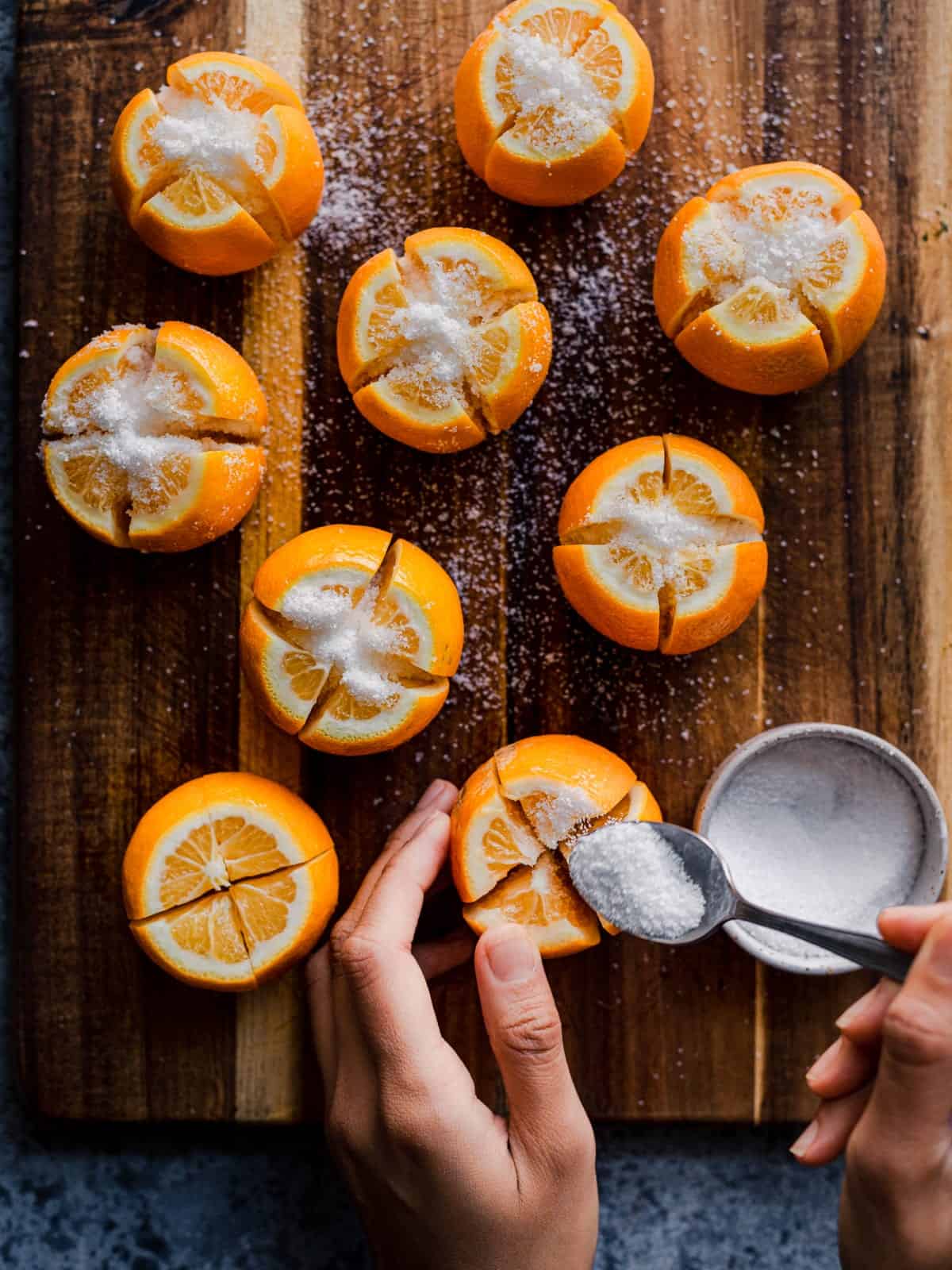
- Cut the Lemons: For classic preserved lemons, cut each lemon lengthwise into quarters, but do not cut all the way through; leave them attached at the base, so they resemble a flower. This allows them to open up and be easily packed, while still maintaining their form. If you prefer smaller pieces, you can slice them into quarters all the way through, or even into thin slices as some recipes suggest.
- Salt and Pack: Open each quartered lemon and generously pack the inside with a tablespoon or so of salt.
- Layer in Jars: Begin tightly packing the salted lemons into your sterilized jars. Press down firmly on each lemon to release its juices and eliminate any air pockets. The tighter you pack them, the better. Add a sprinkle of salt between layers as you go. You want the lemons to be completely submerged in their own juice and salt.
- Top Up with Juice (if needed): If, after packing all the lemons, they are not completely submerged in their own released juices, top up the jar with additional fresh lemon juice until the lemons are fully covered. This is essential for proper preservation and to prevent mold.
- Seal and Store: Seal the jars tightly with their lids. Place them in a cool, dark place, such as a pantry or cupboard. For the first week, gently invert the jars once a day to help distribute the salt and juices.
- Cure with Patience: Allow the lemons to cure for a minimum of 3-4 weeks. During this time, the rinds will soften, and the flavors will meld and deepen. You might see some bubbling, which is normal for fermentation. After the curing period, once opened, store your preserved lemons in the refrigerator, where they will keep for many months, even up to a year.
For more detailed guidance and troubleshooting, check out DIY Preserved Lemons: Unlock Rich Umami & Culinary Depth.
Unleashing the Flavor: Creative Uses for Preserved Lemons
Once your preserved lemons are ready, a world of culinary possibilities awaits! The key to using them is typically to rinse the preserved lemon under cold water to remove excess salt and, if desired, scrape out the pulp (which can be very salty and intensely flavored) before mincing or slicing the tender rind.- Moroccan Tagines & Stews: This is arguably their most famous application. A few pieces of minced preserved lemon rind stirred into a chicken, lamb, or vegetable tagine adds unparalleled authenticity and depth.
- Fish & Seafood: Finely diced preserved lemon rind can be mixed with olive oil, herbs (like parsley or dill), and a touch of chili for a vibrant dressing over grilled fish or roasted salmon. It's also excellent in marinades.
- Salads & Dressings: Mince the rind and add it to vinaigrettes for green salads, grain bowls, or bean salads. It provides a savory, bright counterpoint that elevates fresh ingredients.
- Roast Chicken & Vegetables: Tuck slices of preserved lemon under the skin of a chicken before roasting, or toss minced rind with root vegetables (carrots, potatoes, parsnips) before roasting for an aromatic twist.
- Pasta & Grains: Stir minced preserved lemon into pasta dishes with olive oil, garlic, and fresh herbs, or fold it into couscous, rice pilafs, or quinoa salads for an unexpected burst of flavor.
- Salsas & Relishes: Combine with fresh tomatoes, cucumbers, herbs, and a touch of spice for a unique salsa that pairs wonderfully with grilled meats.
- Compound Butter: Blend finely minced preserved lemon with softened butter and fresh herbs (like rosemary or thyme) to create a compound butter perfect for finishing steaks, slathering on crusty bread, or tossing with steamed vegetables.
- Mashed Potatoes: As a simple yet effective trick, stir a tiny bit of minced preserved lemon through mashed potatoes to serve with fish for an incredible flavor boost.
